The Inner Ground
Is identity fixed, or does it change as we move through life? What forms it, and what has the power to transform it? I was born in the Soviet Union and grew up in Russia. At nineteen, I left. Since then, I have lived in the United States, Argentina, England, Belgium and now Spain. In 2025, I received Spanish nationality. A new document. A new name on paper. And with it, a pause. What does it mean to belong? Does a new passport reshape who I am? This project emerged from these questions.
I have come to understand identity not as something we consciously construct, but as something formed much earlier, through childhood, family and culture, through what we absorb before we have language. Stories, gestures, tones of voice, ways of relating and seeing the world become the foundation. They come from those before us, from lineage, inherited memory, a cultural rhythm carried in the body. This is the core. Everything else builds on it.
For me, that ground is Russian, not as a political definition, but as a field of memory, sensibility and inherited patterns. It remains as life moves across countries and languages. Living elsewhere adds layers, but does not replace the base. Identity expands and adapts, but its foundation persists.I
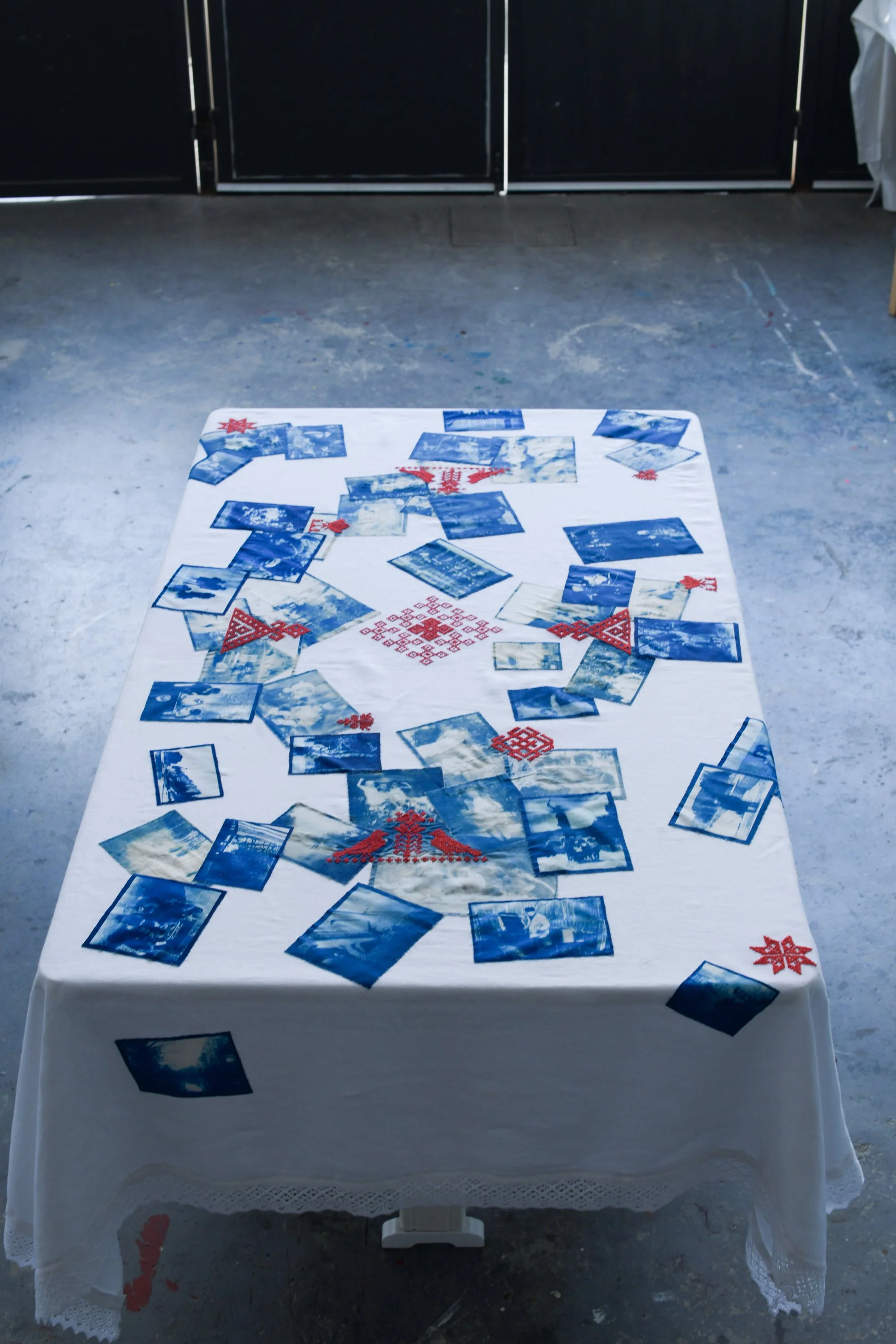
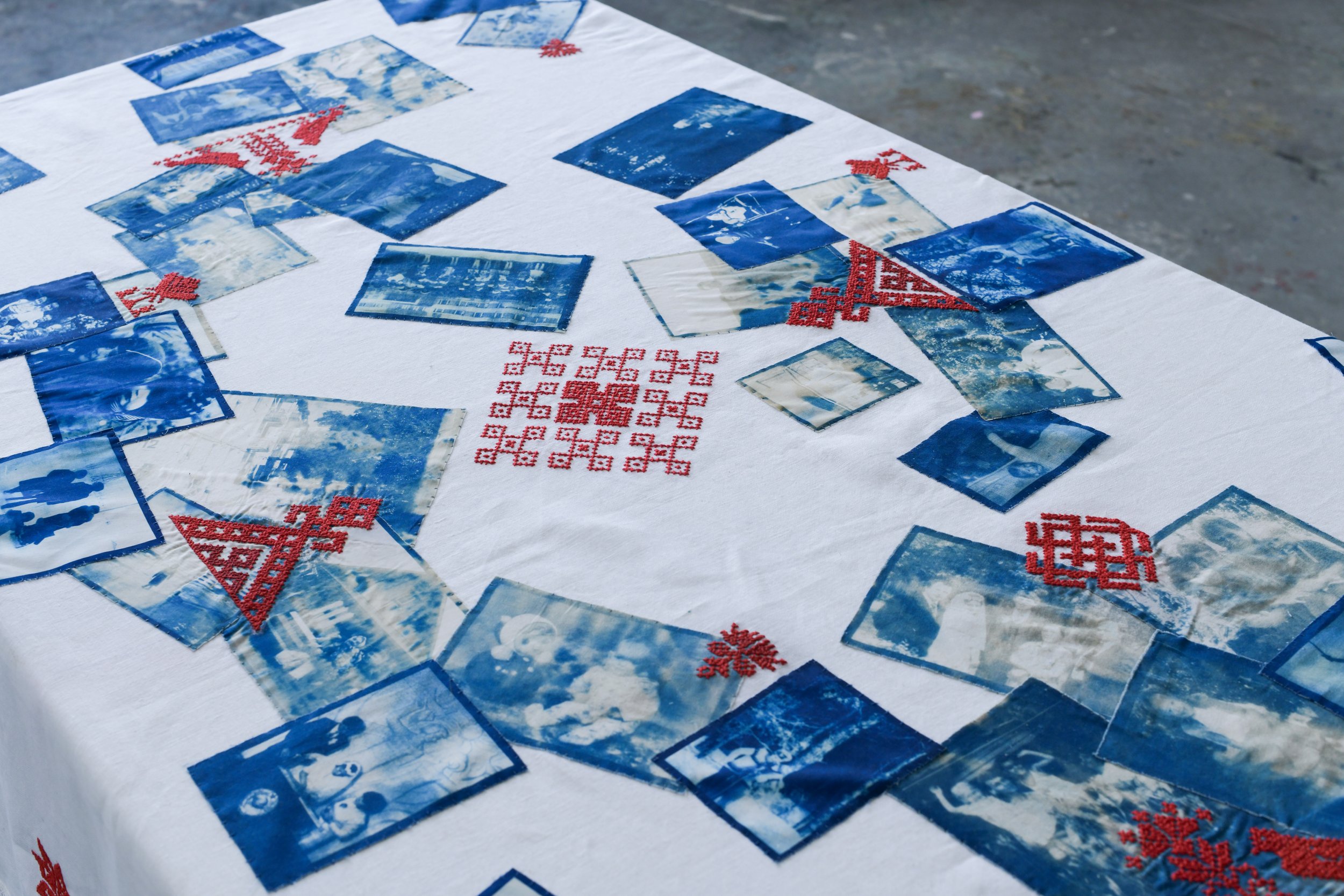
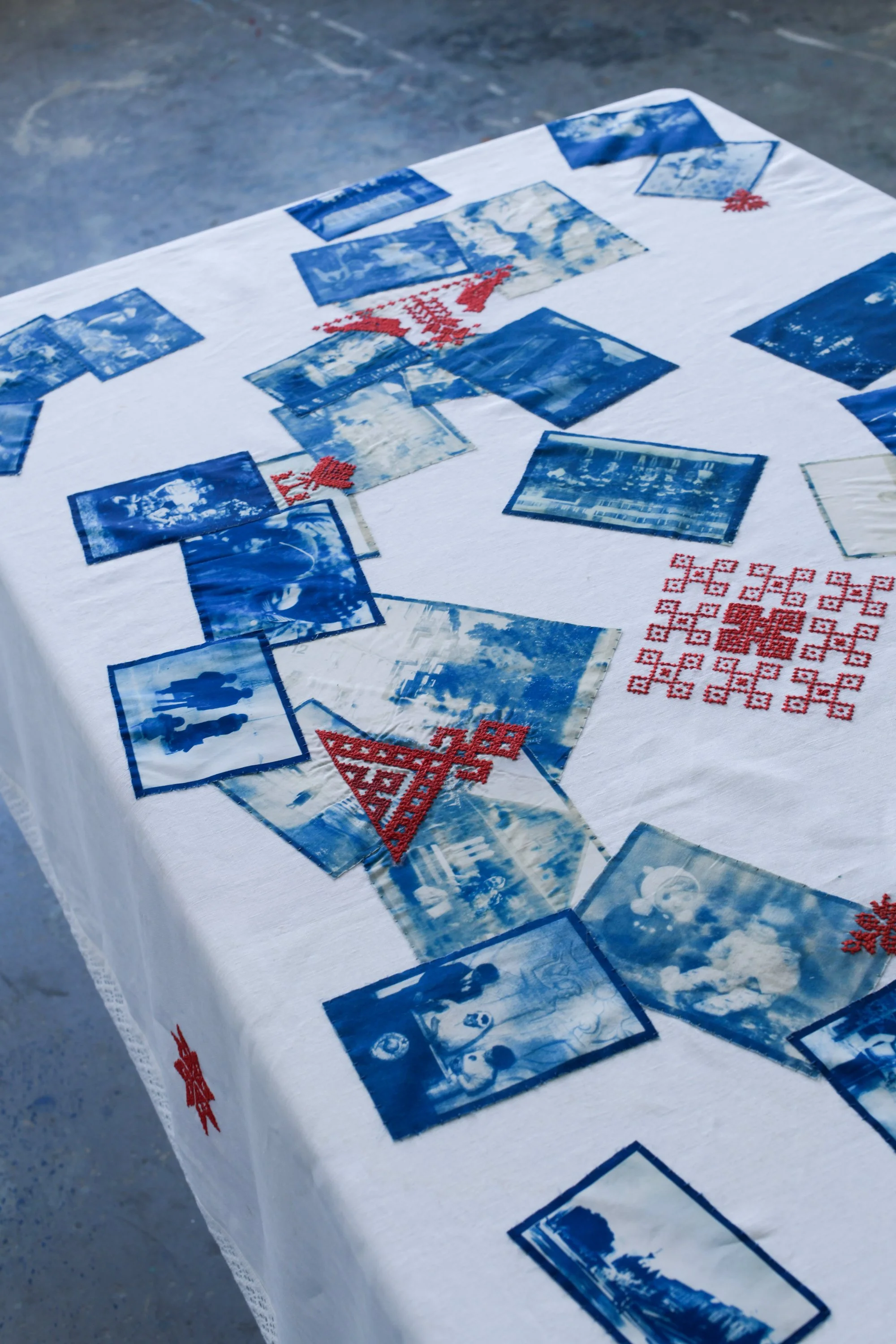
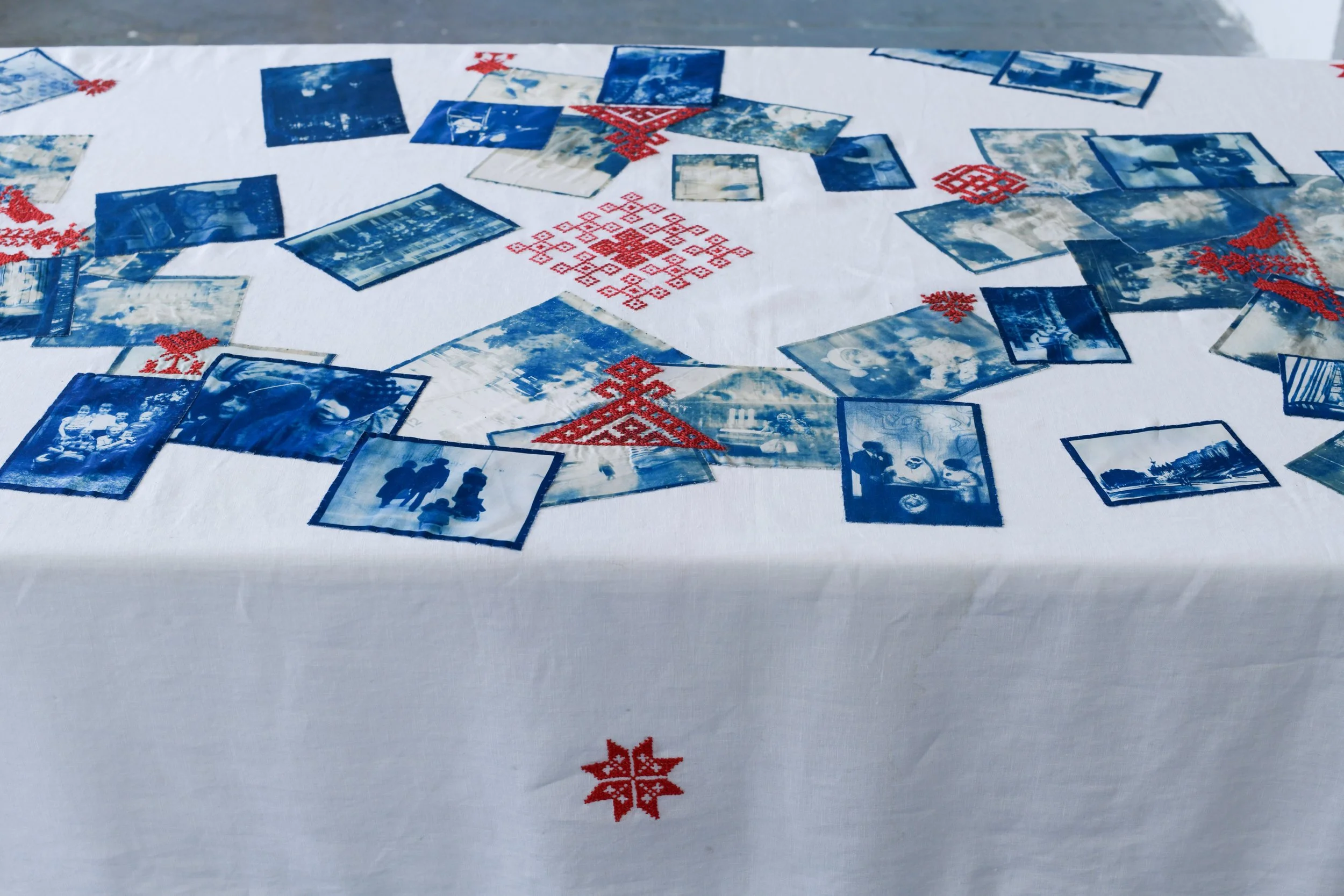
n Russian tradition, the table is the centre of the home, a place of gathering and exchange. The tablecloth is not a decoration. It prepares the space, marks it as intentional, and creates the ground on which everything happens. It is the base.
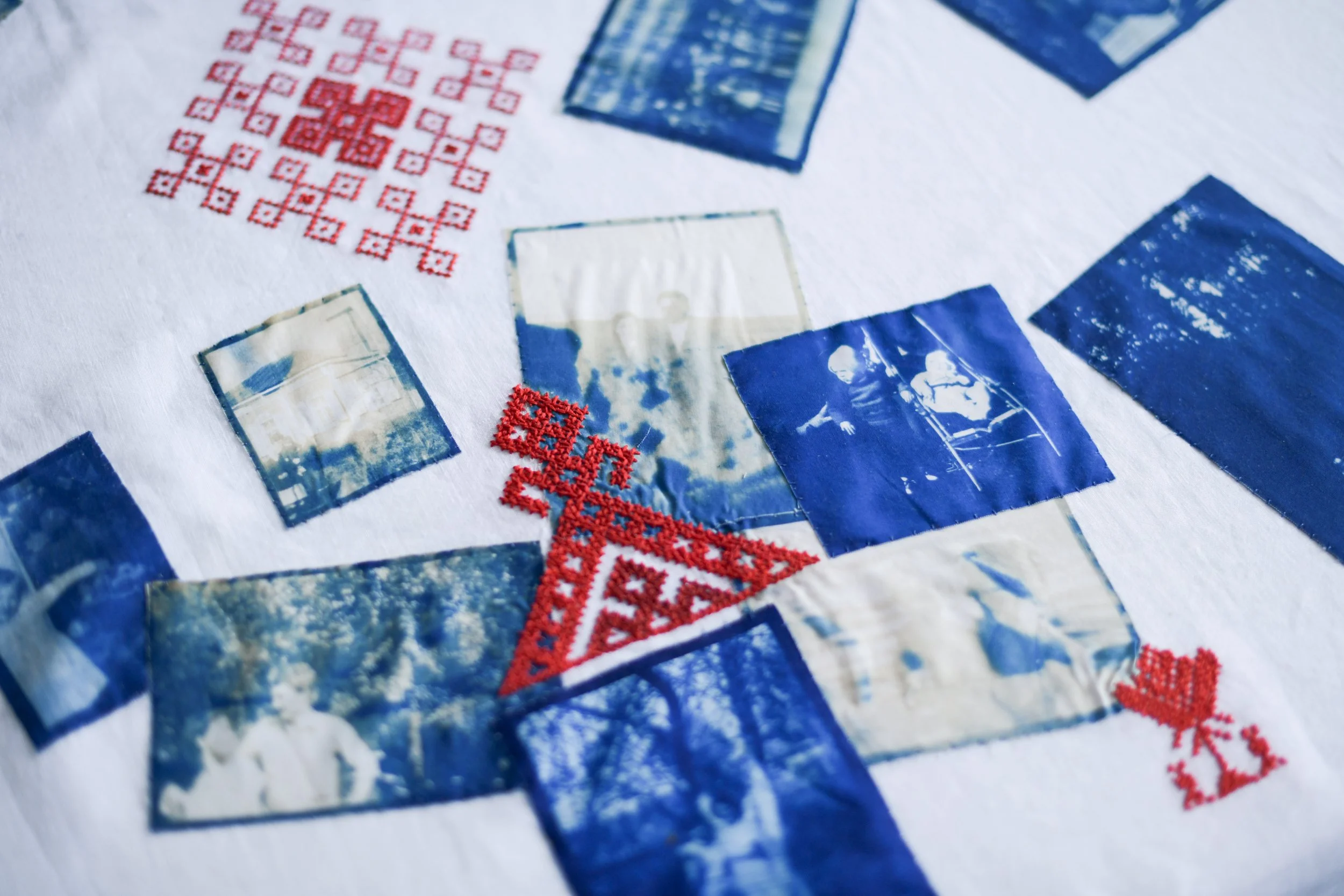
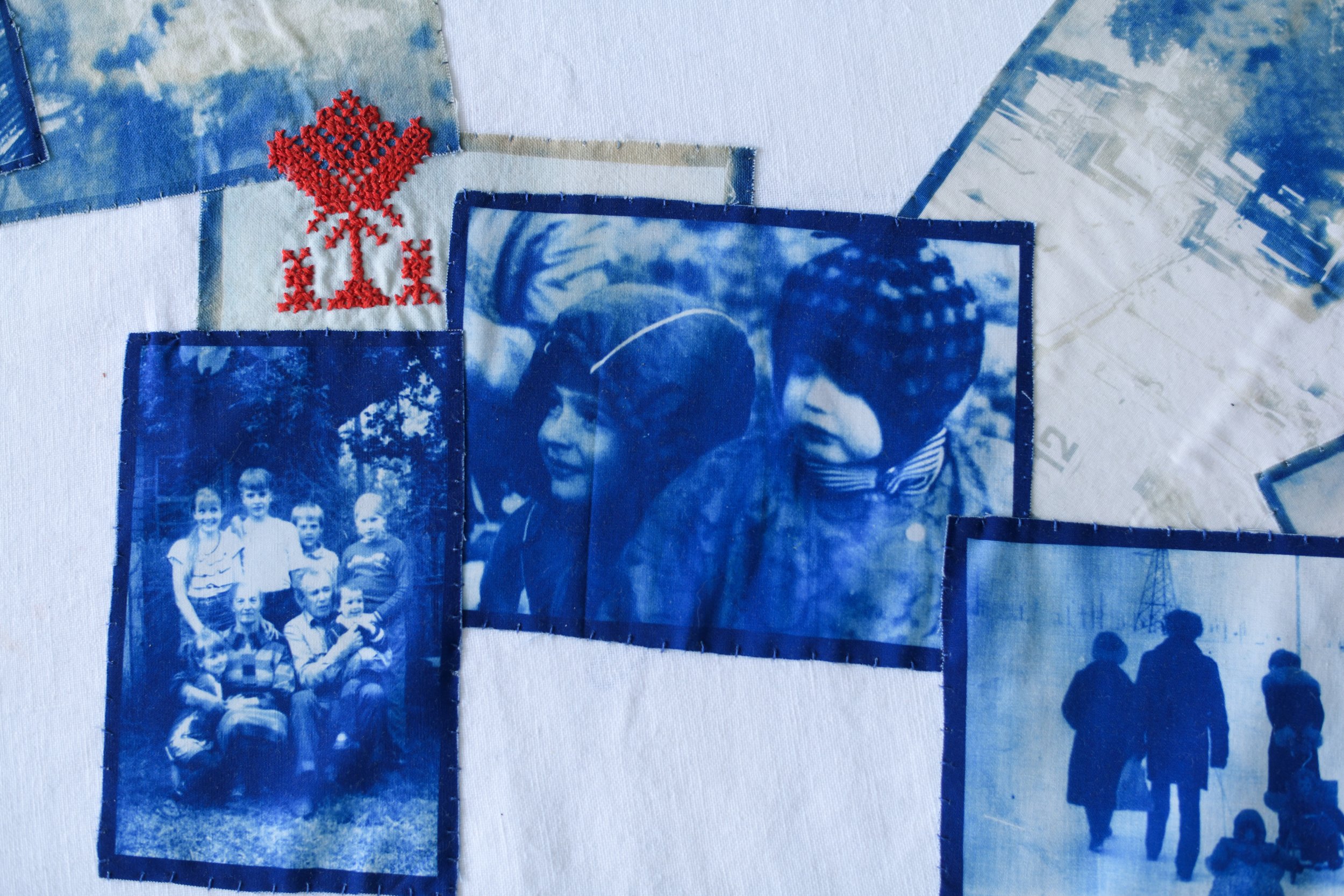
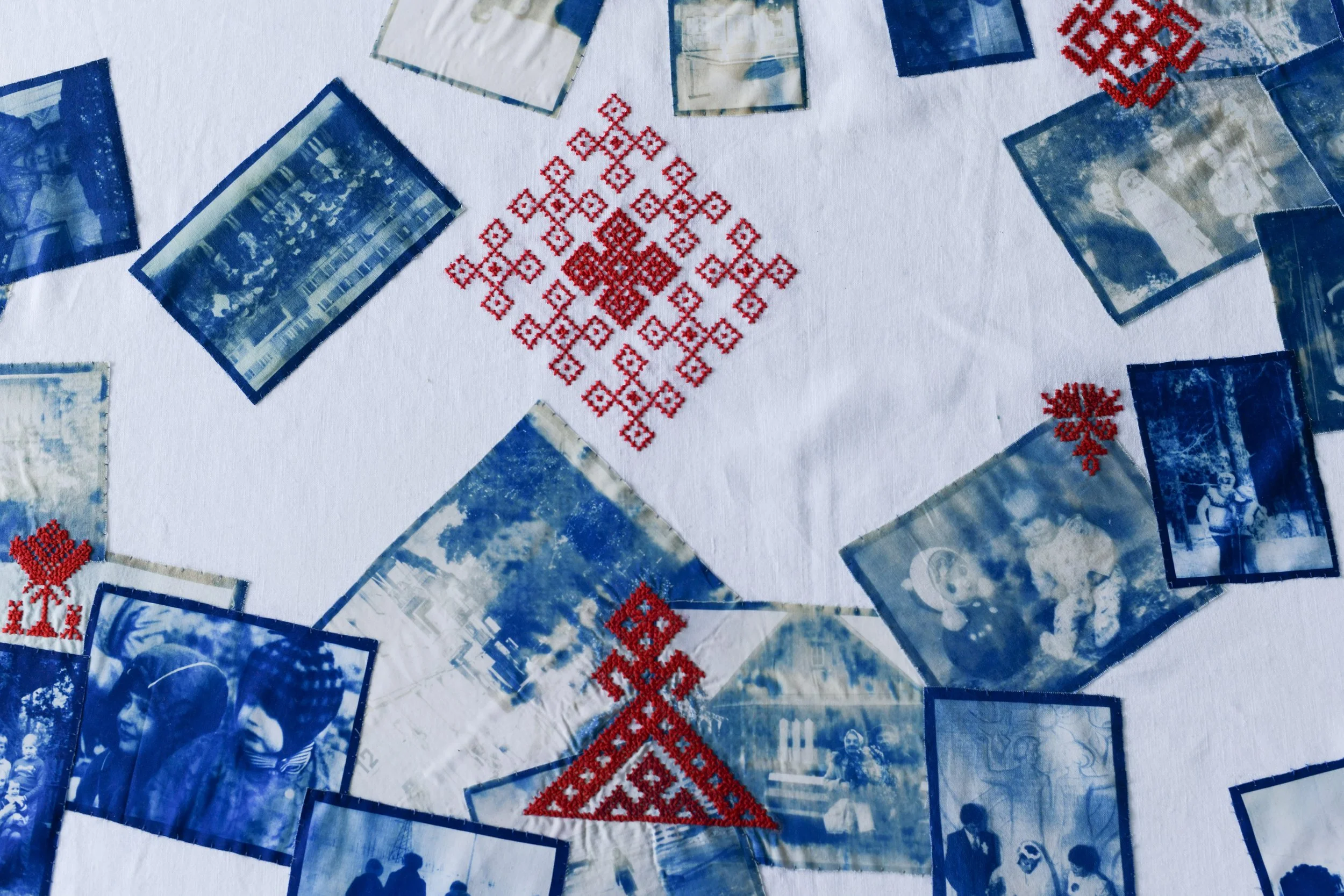
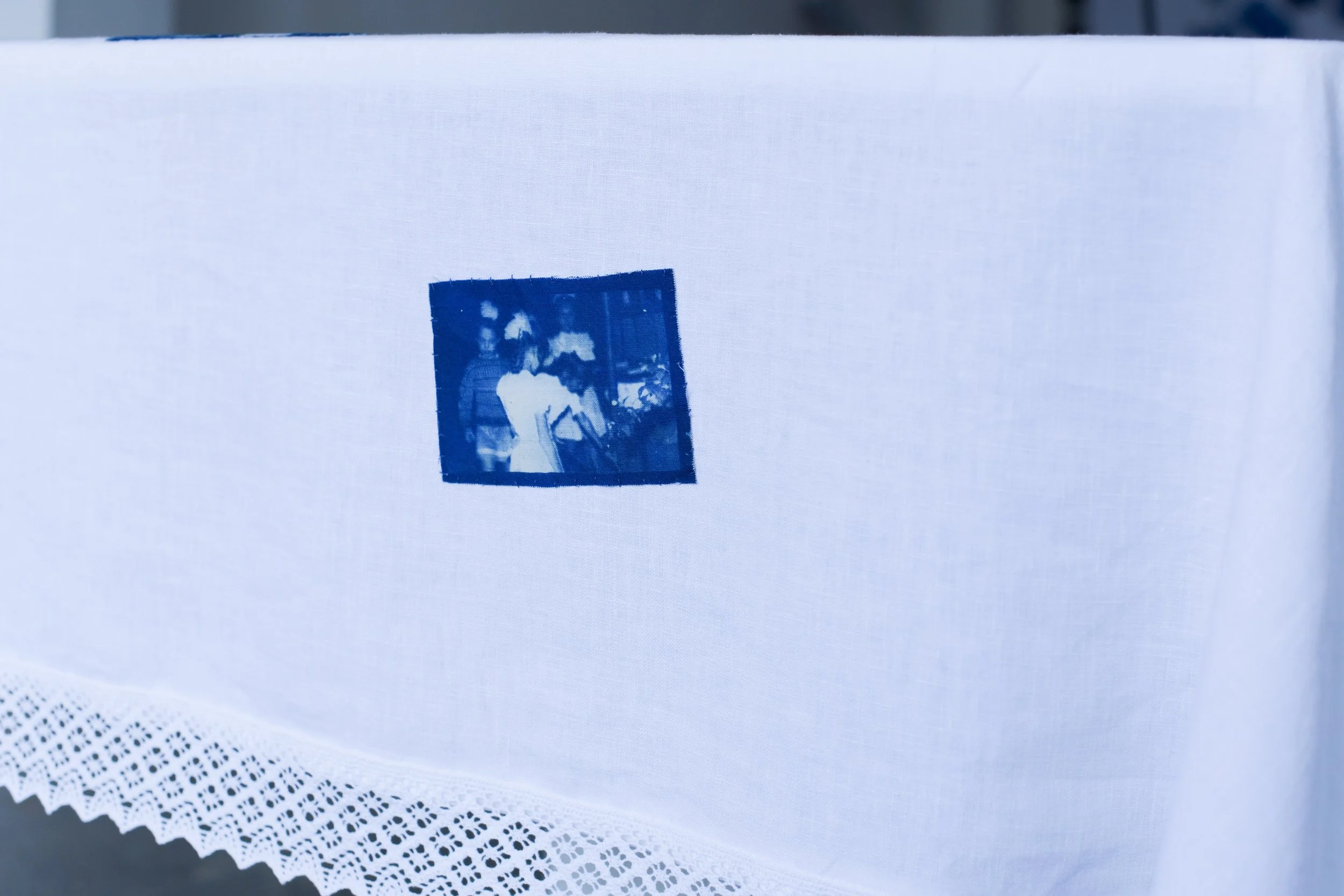
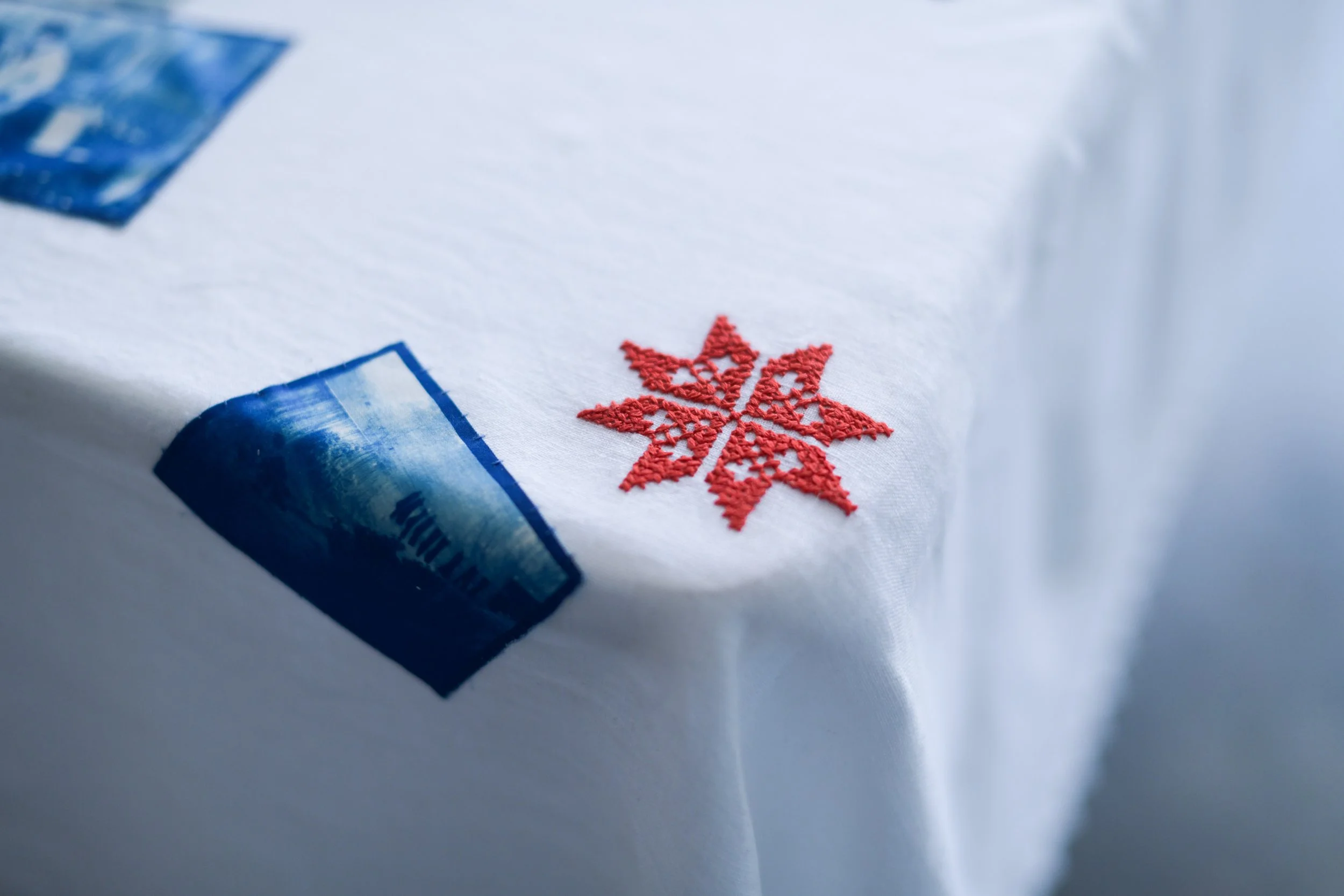
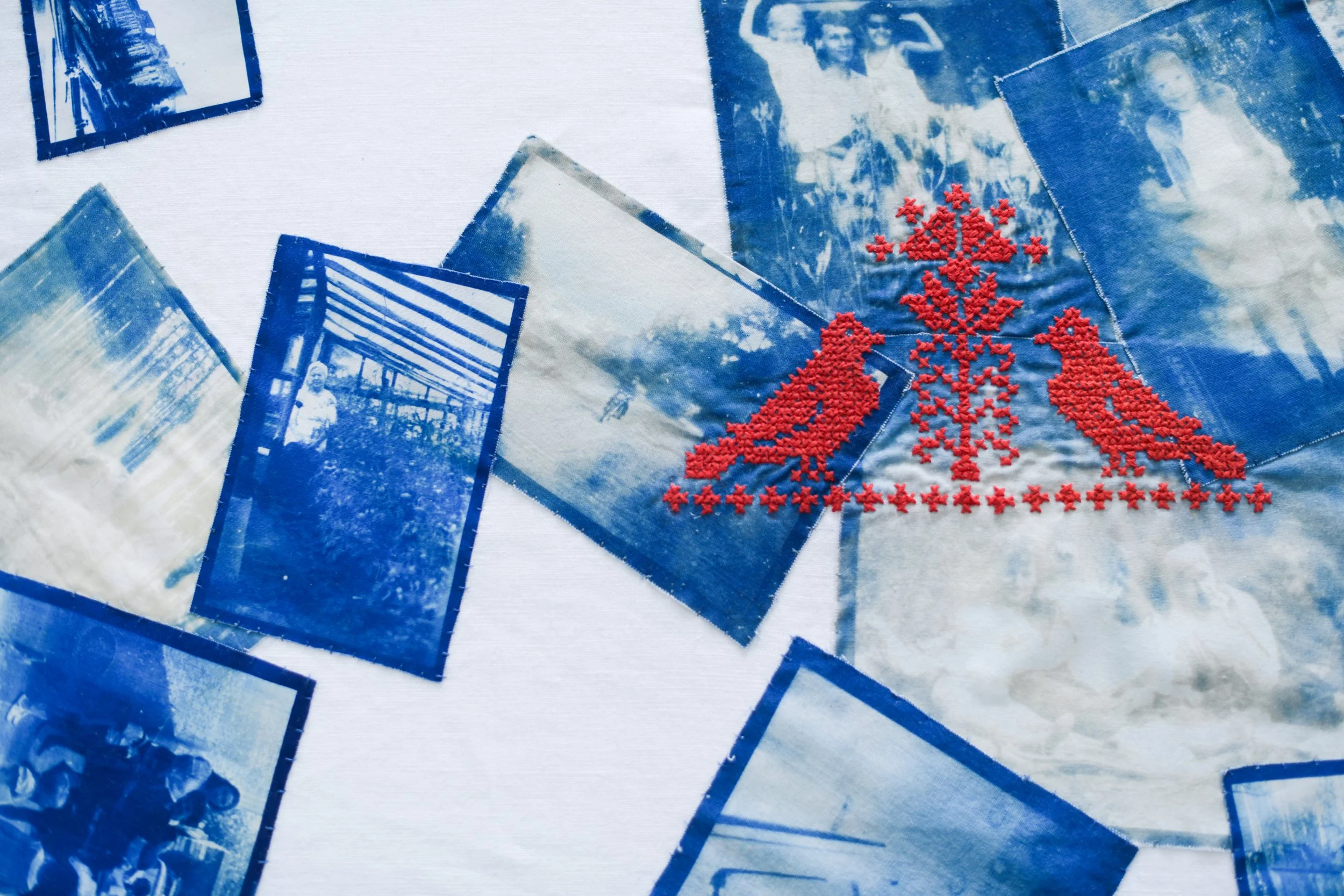
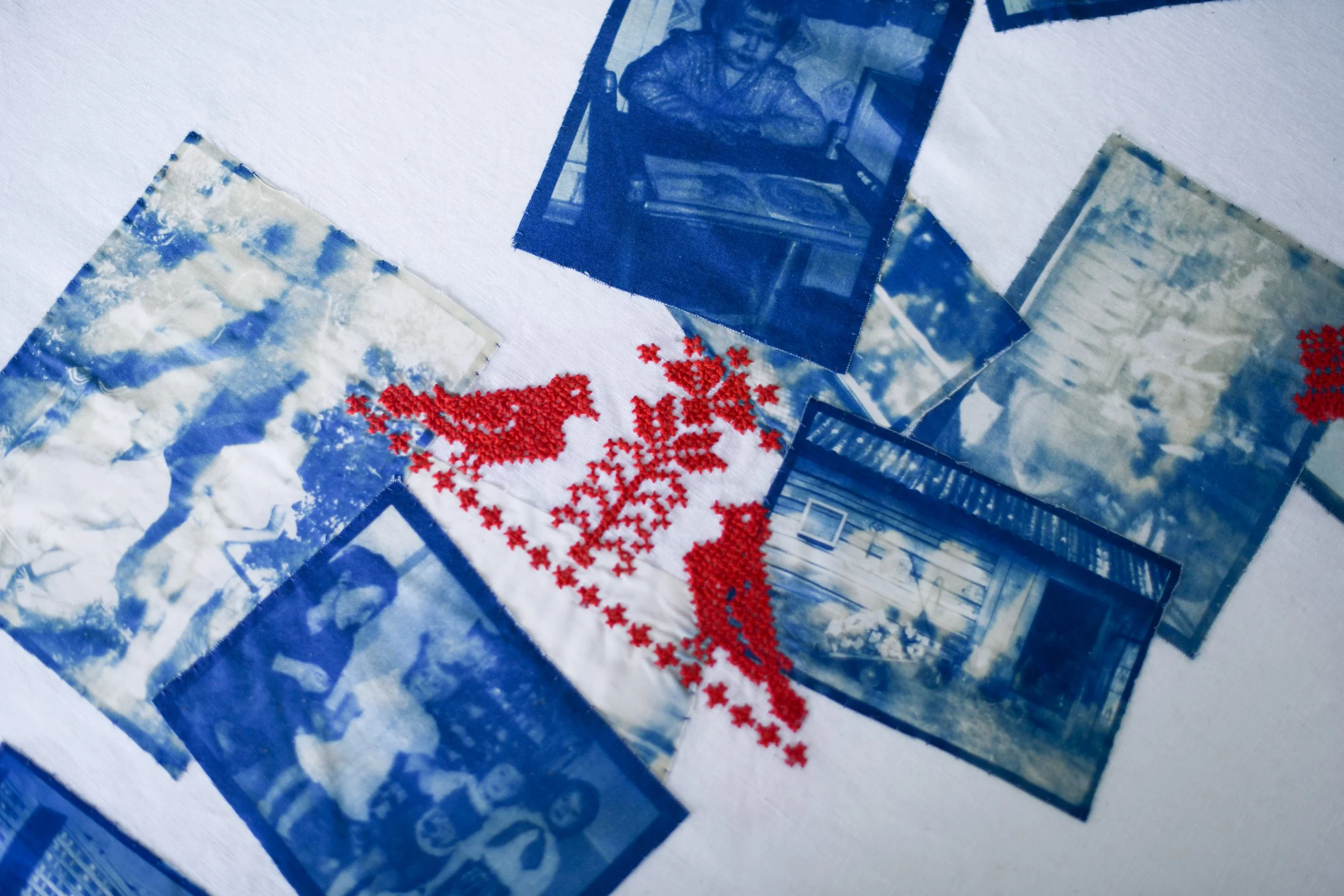
In this work, the tablecloth becomes a metaphor for identity itself, a surface that holds what we carry. Before you, a sequence of images from my personal archive unfolds, fragments of daily life and moments of significance. Together, they form a cultural and emotional landscape, an entry point into who I am.
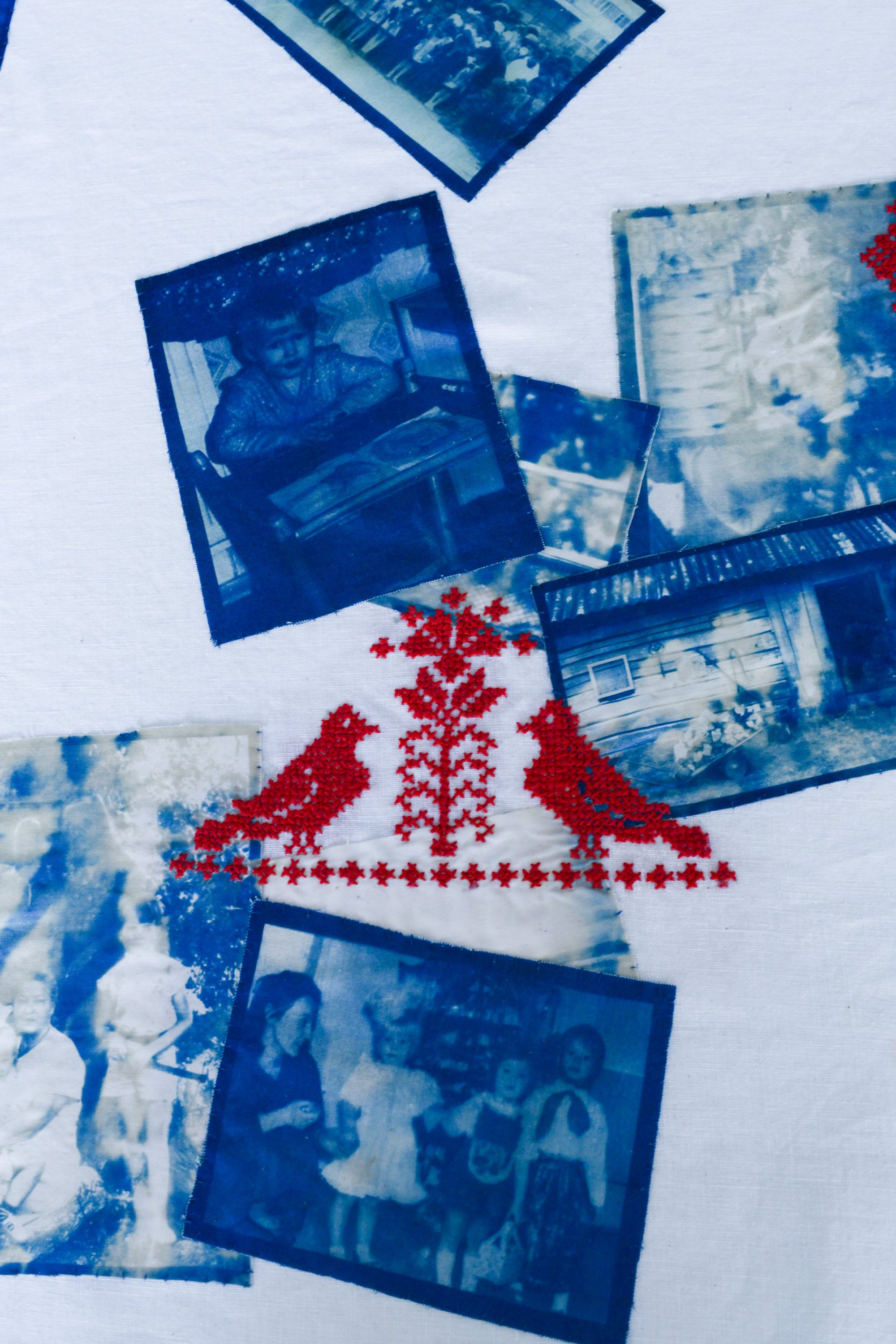
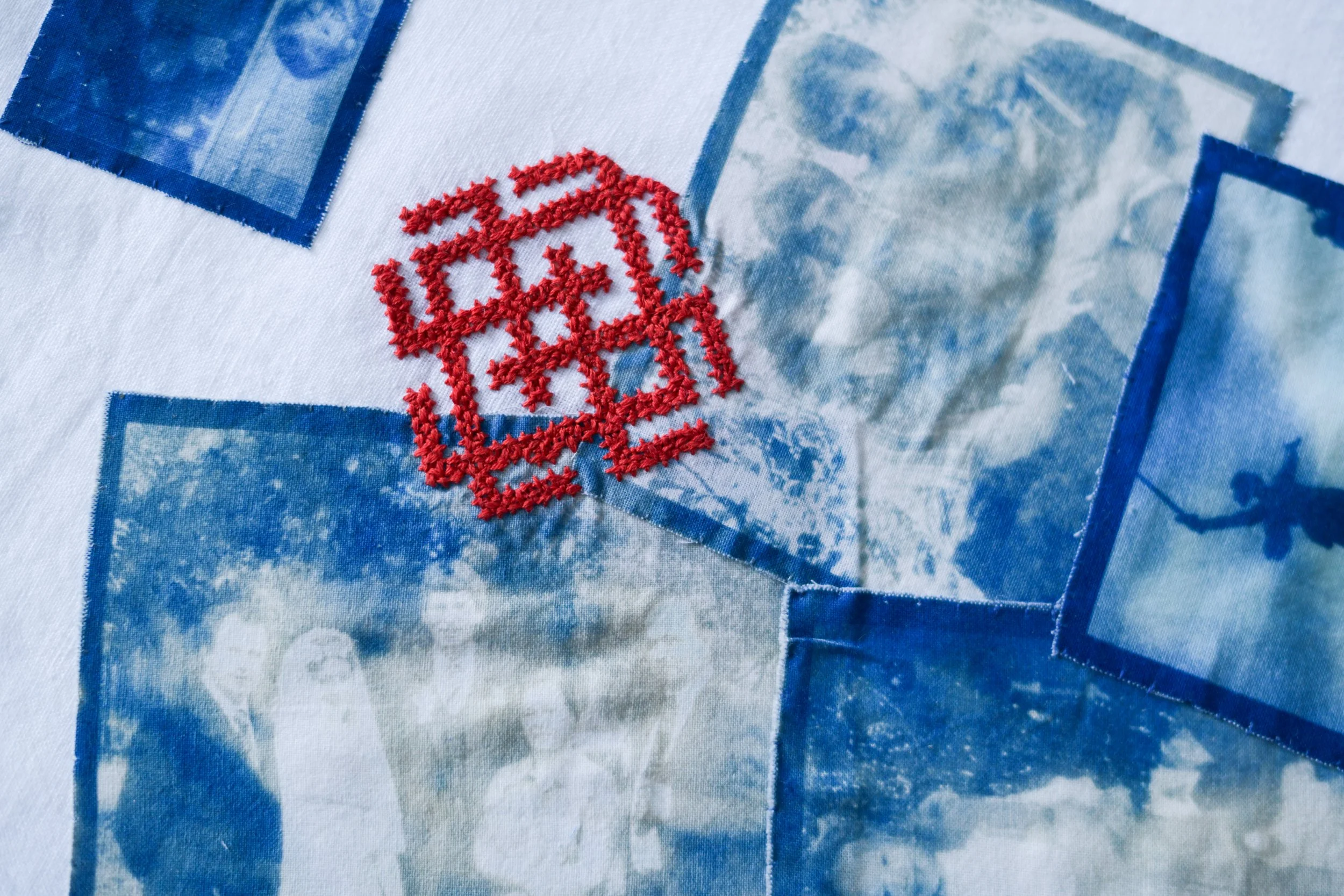
The images, scattered and roughly stitched, exist in different states. Some are clear, others faded, partially lost, transformed. Memory is not fully conscious. Much of what shapes our lives is outside awareness, stored as impressions rather than precise images. The faded photographs speak to what is absorbed but not fully seen, while newer images appear more defined, closer to what can be named.
Both lineage and memory carry a wild quality. Lineage grows across generations beyond control. Memory moves unpredictably, holding fragments while letting others disappear. Between these forces, identity takes shape. Embroidery enters as an act of protection. Across cultures, it has been used to guard and to hold meaning. The symbols draw from traditional Slavic embroidery. The mother marks origin, the tree traces lineage, the star offers orientation. Together, they hold the fragile, shifting nature of memory.
Identity is not what changes. It is what remains underneath change.